 Tractor GPS
GPS vs RTK: What's the Difference for Farmers?
GPS and RTK: what changes in the cab?
Basic satellite positioning tells a receiver approximately where it is. The location you see depends on the receiver, its view of the sky, and the conditions around it. That's why a phone and a roof-mounted agricultural receiver can behave differently in the same field, even though both use satellite signals.
RTK adds a correction source
Real-time kinematic, or RTK, combines suitable receiver hardware with correction data to improve positioning. It's the kind of setup used when work calls for high accuracy and repeatability. But "RTK" on a product page isn't the whole shopping list: ask about compatible equipment, correction coverage, subscriptions or base stations, and what happens when the signal drops.
Which one fits your work?
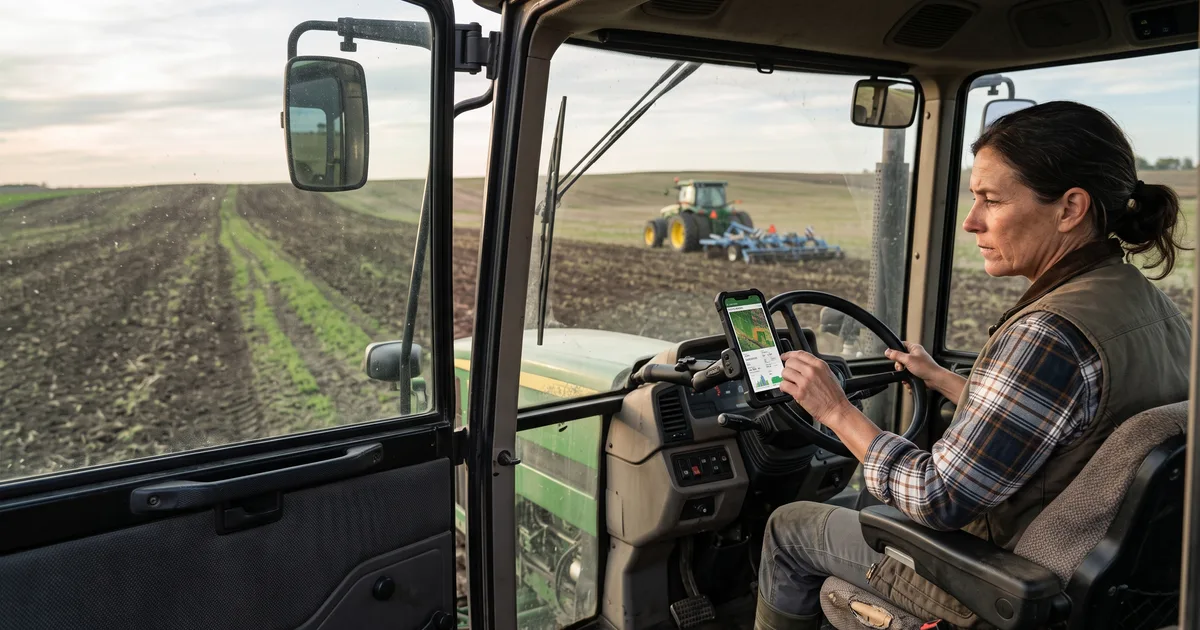
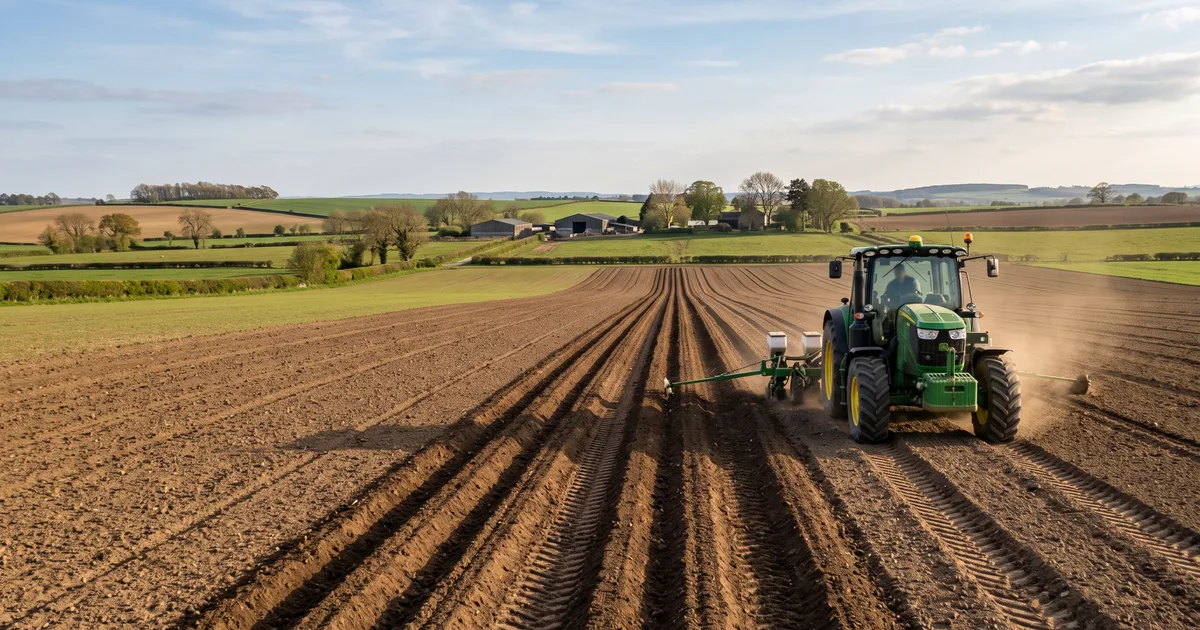
If you're trying visual guidance with a broad implement, first check whether the position holds up for the job. If you need to return to narrow planting rows or repeat the same tracks later, the accuracy requirements are different. Tractor GPS gives you field guidance on a phone or tablet; installing the app doesn't turn the phone into an RTK receiver or an auto-steer system. Pick the positioning setup after you know how much error your task can tolerate.
Try Tractor GPS on your phone
Turn your phone or tablet into a practical GPS field guidance tool — AB lines, field boundaries, area measurement, and work logs.
Download on the App Store